
Why Being Gentle With Yourself Matters in Emotional Healing

(Inspired by insights from Less Pain, Fewer Pills)
In a world that constantly pushes us toward productivity, healing is often treated the same way—something to “get through,” fix quickly, or check off a list. But emotional healing doesn’t work that way. In fact, one of the most overlooked (and most important) aspects of healing is learning to be gentle with yourself in the process.
Many of the concepts explored in Less Pain, Fewer Pills highlight the deep connection between emotional health and physical pain. The body doesn’t just carry injuries—it carries experiences, stress, and unresolved emotions. When we begin doing deeper emotional work, whether through modalities like The Emotion Code®, mindfulness, or other integrative approaches, things can shift… sometimes subtly, sometimes intensely.
And that’s exactly why gentleness matters.
Healing Isn’t Linear
When emotional layers begin to surface, it doesn’t always feel like progress. You might feel more tired than usual. Old memories or emotions may resurface. There may even be moments where symptoms seem to temporarily increase.
This doesn’t mean something is going wrong—it often means something is moving.
The body has been holding onto patterns for a long time. When those begin to release, it can take time for your system to recalibrate. Giving yourself space during this process allows the nervous system to feel safe enough to continue healing.
Your Body Is Not the Enemy
One of the key takeaways from Less Pain, Fewer Pills is that the body is not working against you—it’s working for you. Symptoms are not random. They are messages.
Pain, tension, fatigue, and emotional discomfort are often signals that something deeper needs attention. When we approach these signals with frustration or urgency, we can create more resistance. But when we meet them with curiosity and compassion, we create an environment where healing can actually occur.
The Power of Slowing Down
Gentleness requires a shift in mindset—from doing more to allowing more.
That might look like:
Resting when your body asks for it
Taking breaks after emotional work
Hydrating and nourishing your body intentionally
Spending time in quiet reflection instead of pushing forward
These small actions send a powerful message to your body: you are safe.
And safety is where healing begins.
Integration Is Just as Important as Release
Releasing trapped emotions or uncovering underlying patterns is only part of the process. What happens afterward—how you support yourself—is just as important.
Integration is where lasting change happens.
When you give your body time to process, you allow new patterns to take hold. You’re not just clearing something out—you’re creating space for something new.
A New Approach to Healing
If there’s one thing to take away, it’s this:
You don’t have to force your healing.
You don’t have to rush it.You don’t have to “get it right.”
Your role is simply to listen, respond, and support your body with compassion.
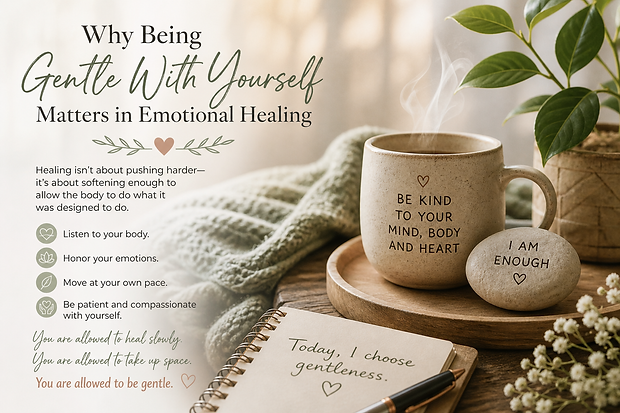
Because healing isn’t about pushing harder—it’s about softening enough to allow the body to do what it was designed to do.


Comments